
Gulyarra Gabbi Djalum Kalleep

The Meeting Place of the Saltwater Camp
By Sandra Hill
Mia Mias
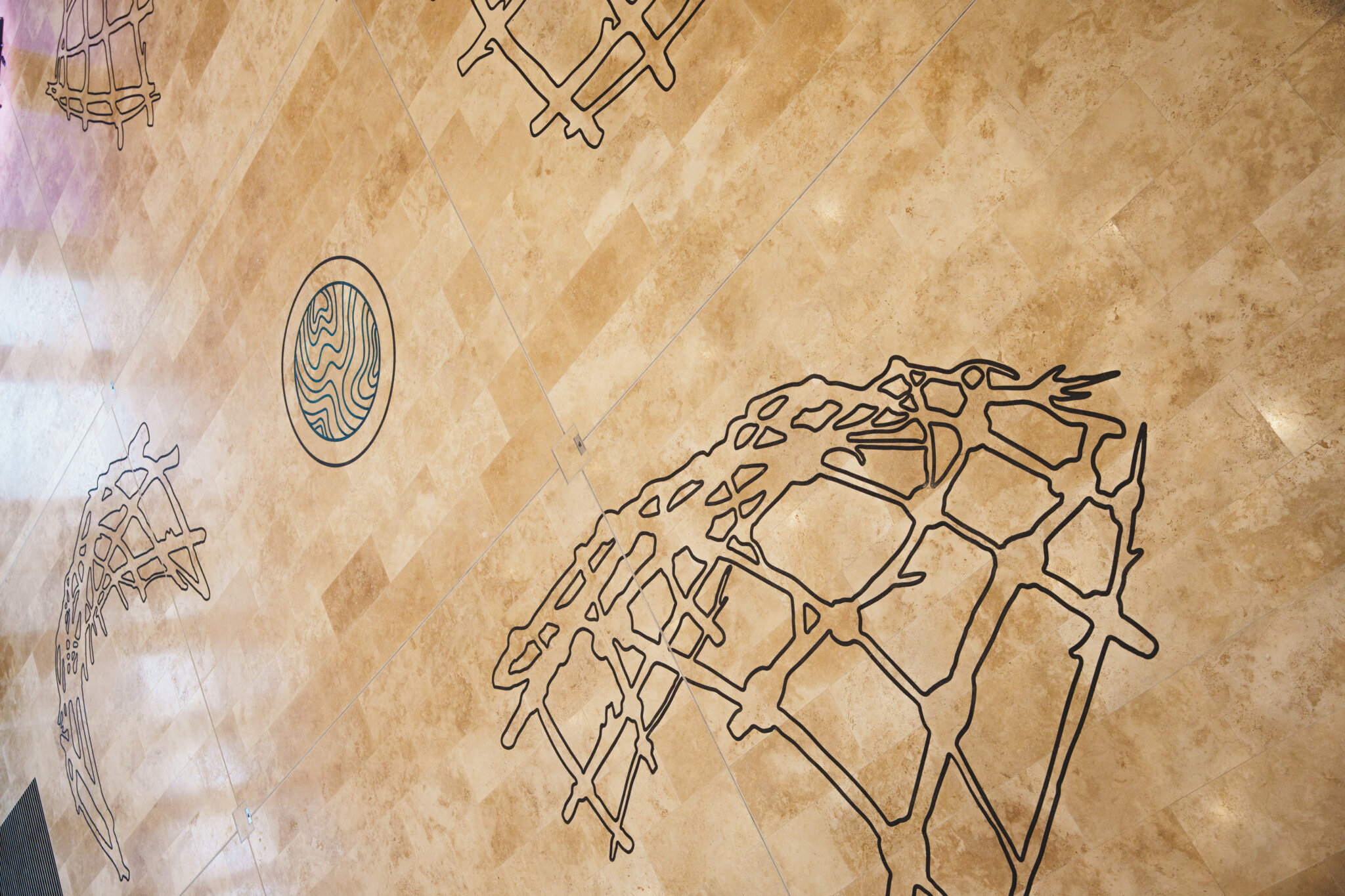
A Mia Mia is our traditional house, our home, our shelter. The framework of our ‘Mia’ is built using the bent boughs or branches of the juvenile Wannang (Peppermint) tree and bound together by ‘rope’ that is made using the natural fibres from plants such as bullrushes or native flax. The Mias are then covered in leafy tree branches in the warmer summer months to allow the cool afternoon winds to blow through or alternatively with paperbark in the cooler wet months which keep the Mias dry and shield the family from the harsh cold winds.
When the family moved inland for the cooler, wet seasons the Mias were left in place at the camp for when they returned later in the warmer times, the Mia Mias were then re-covered so they could be used again by the family.
They were so well constructed that they continued to serve the family over numerous seasons so that, wherever the Bibbulmun people travelled and camped they would usually have a Mia ready for their families to go back to.
The Mia Mias designed for the floor in the foyer of the Saltwater building are simple uncovered frames, which is symbolic of the Wadandi ‘family’ having moved camp, but the Mia Mias remain there representing our continuous and ongoing connection to that place.
There are four Mia Mias close together which, as a group, form a ‘camping place’ that most importantly, also represents family, community, unity, safety and strength.
The entry to Mia 1 is placed halfway in and halfway out of the front sliding doors of the building which is symbolic of Wadandi people always being, and feeling welcomed to Saltwater, the ‘open door’ is also a way of acknowledging our long connection to the land where it sits, that place now becoming a shared space for both Wadandi people and all members of the Busselton community and beyond.
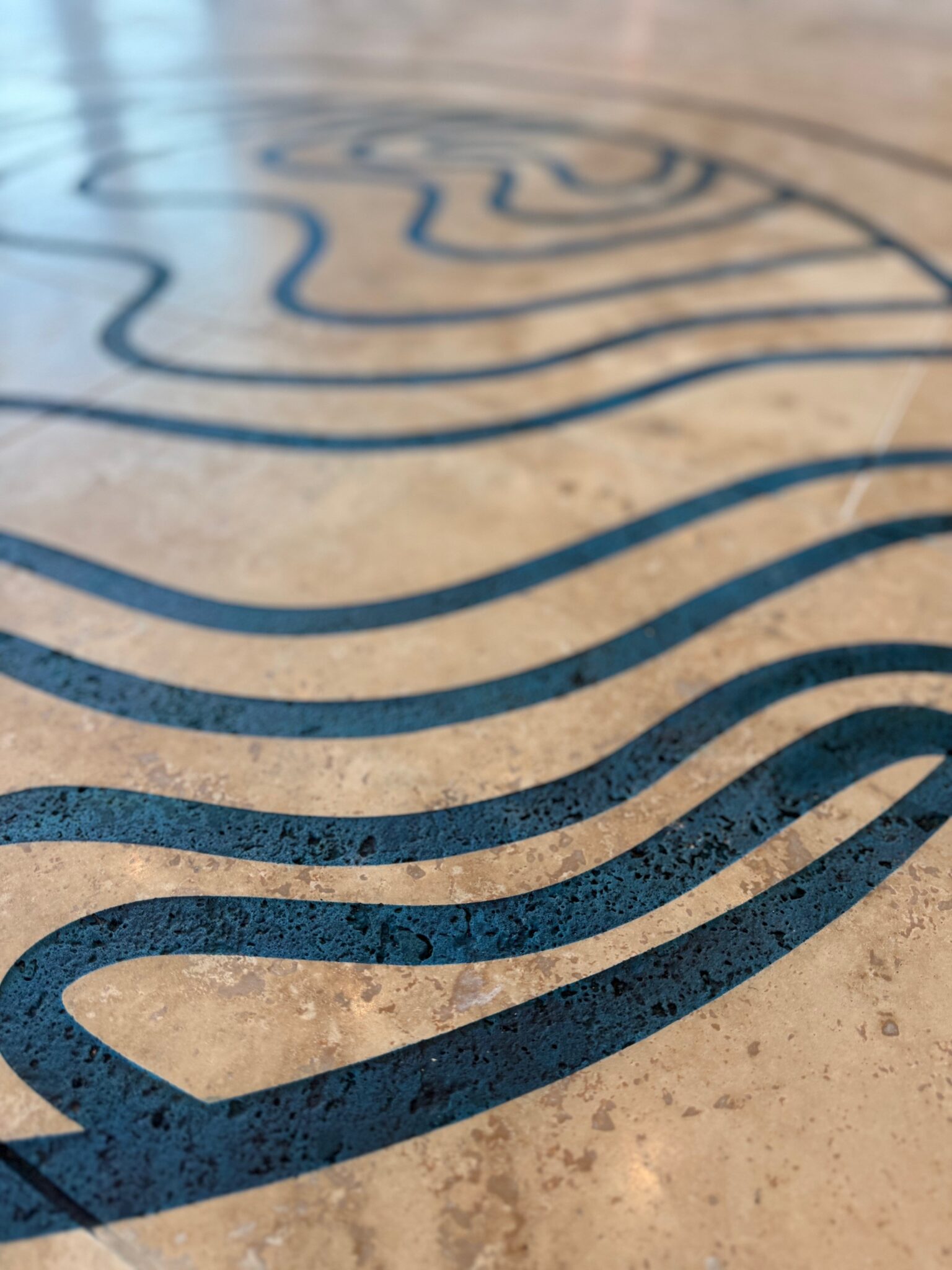
The central design represents the water – Geographe Bay and the Vasse. Busselton sits between the ocean – the salt water, and the river – the fresh water.
The central design not only references the tidal movement of both waterways, but it also sits central to the Mia Mias, which symbolises the campfire which, in all cultures, is a place to gather with family and friends, to talk, dance, make music, sing songs, share stories and spend time together.
To me ‘Saltwater’ is about honouring the past and celebrating the future, it’s about being ‘home’ and, it’s about people from all walks of life gathered together, creating and sharing ongoing memories with family and friends.
Background
The new Saltwater building has been erected on Wadandi Country and as an Elder and Custodian from this land I feel very privileged to be able to create a meaningful and culturally appropriate ‘entry statement’ design for the floor of the foyer, that not only recognises all Wadandi people and their culture, but also acknowledges our ongoing presence on this beautiful Country.
Initial discussions, between Wadandi Elders and the Saltwater Project Committee, led to my name being put forward to work on the entry statement floor design.
Further consultation with Elders and the City of Busselton indicated that the design would need to signify an important but simple element of Wadandi Culture that was both significant to our people but also recognisable by those who walk through the front doors.
Thank you
Thank you to Origins Market for sponsoring Saltwater’s foyer artwork, Gulyarra Gabbi Djalum Kalleep by Sandra Hill.